Our Location
Room 503, block 1, Juzili Building, Sandun Town, Hangzhou City, Zhejiang Province. China.

Room 503, block 1, Juzili Building, Sandun Town, Hangzhou City, Zhejiang Province. China.

Precision in Every Connection

A Binding Post is a versatile electrical connector widely used in audio systems, testing instruments, and industrial devices. This comprehensive guide explores its structure, types, materials, and applications while providing practical advice for beginners and professionals.
A Binding Post may seem like a small and simple component, yet it plays a critical role in modern electrical, audio, and laboratory systems. Found everywhere—from speaker terminals and power supplies to industrial controllers and test instruments—binding posts provide a safe, flexible, and highly reliable way to establish electrical connections.
For beginners, the variety of designs and specifications can appear overwhelming. From an engineering perspective, binding posts are often the final interface between a designed electrical system and real-world wiring conditions.
For engineers, selecting the correct binding post is essential for ensuring safety, conductivity, long-term stability, and system performance.
This guide explains how binding posts work, the different types available, how to choose the right one, and how they are used across industries.


A Binding Post is a panel-mounted electrical connector designed to secure bare wires, banana plugs, spade lugs, alligator clips, or pin connectors. Its threaded mechanism and insulated structure allow frequent cable changes while maintaining a low-resistance, stable electrical connection.
Binding posts are widely used in:
Their most significant advantage is versatility—they accommodate multiple connector types and wiring methods, making them indispensable in both audio and laboratory applications.


Although a binding post looks simple, its internal engineering is optimised for conductivity, mechanical stability, and safety. Most binding posts include five core components:
Metal Conductor(Core Post)
This is the conductive heart of the binding post. It is typically made from:
The choice of metal significantly affects voltage drop, heat generation, and long-term performance. Usually, gold-plated binding posts are recommended for high-fidelity audio systems, while stainless-steel insulated posts are preferred for industrial environments.
For a detailed, application-driven explanation of how material choice affects electrical performance, mechanical stability, and compliance results, see this Binding Post Body Material selection guide.
Engineers often evaluate this during the selection of binding post material.
Threaded Shaft & Nut
This mechanism securely clamps the bare wire or spade lug. Proper tightening ensures intense mechanical pressure and low contact resistance, preventing vibration-related failures.
Insulation Sleeve
Made from PA66, PVC, or nylon, the sleeve prevents accidental contact with the conductive core and withstands heat and impact, especially in high-voltage environments.
Terminal Head / Cap
The cap allows users to tighten by hand and also serves as a polarity indicator (red, black, green). It often includes grooves for better grip.
Panel Mounting Threads
Binding posts usually pass through a chassis hole and are fastened with a rear nut. The panel thickness must match the post length to ensure proper engagement.


Binding posts offer three significant advantages:
Versatility for Multiple Connector Types
They work with bare wire, banana plugs, spade lugs, pins, and sometimes alligator clips. This makes them ideal for testing, experimenting, or upgrading audio systems.
High Reusability & Long Service Life
The threaded mechanism and durable materials allow thousands of connect/disconnect cycles without degrading electrical contact. This is why laboratories frequently rely on binding posts—engineers can change wiring repeatedly with minimal wear.
Safety in High-Voltage and High-Current Scenarios
Insulated designs prevent accidental shock, while metal cores maintain stable electrical paths under load. Industrial models include:
These features ensure that binding posts can operate reliably even in challenging conditions.
Colour Coding for Error-Free Wiring
Colour absolutely matters.
Red = positive,
Black = negative,
Green = ground.
This prevents reverse polarity issues—a critical safety factor in audio, industrial, and laboratory applications.
When binding posts are NOT the best choice for ultra-compact consumer electronics or sealed low-cost products, panel sockets or fixed terminals may be more suitable.


Binding posts come in several structural and functional variations. Choosing the right type depends on connector compatibility, current requirements, installation space, and application. Here are the most widely used categories.
This is the most versatile and commonly used type. It supports:
These posts are widely used in audio amplifiers and high-end speaker systems.
These include a thick insulation sleeve to prevent accidental contact. They are required for high-voltage systems, laboratory power supplies, and control panels where operator safety is critical.
Designed to be installed on enclosures, these posts typically include:
They are widely used in benchtop instruments and audio amplifiers.
These posts use thicker conductors and larger clamping surfaces. They support high-amperage loads (20A–50A or higher) and are used in industrial power distribution, battery systems, and DC loads.
Designed for portable instruments or compact enclosures. Though smaller, they still ensure secure electrical connections.
Use an internal spring for quick insertion and release.
Applications:
Binding Posts are available in various designs tailored to different applications. Below is a summary of the most common types and their features:
| Type | Features | Applications |
| Universal Five-Way Post | Supports multiple connectors, including bare wires, banana plugs, and pin connectors. | Testing instruments, audio devices |
| Insulated Binding Post | Equipped with insulation to prevent current leakage, suitable for high-voltage operations. | High-voltage testing equipment |
| Panel-Mount Binding Posts | Threaded bushing with rear nut; optional insulation. | Benchtop test instruments, audio amplifiers, laboratory equipment, and control panels. |
| High-Current Binding Posts | Thick conductor, large clamp surface for high current. | Industrial power distribution, battery systems, DC power supplies, and high-current load testing. |
| Miniature Binding Post | Compact design saves space, ideal for portable devices. | Small electronic equipment |
| Spring-Loaded Binding Post | Provides a stable connection using a spring mechanism, ideal for frequent plug-in/out scenarios. | Laboratory equipment |
Selecting the correct binding post ensures electrical performance, safety, and long-term stability. The evaluation should consider voltage, current, connector type, mounting space, and environmental conditions.
Before selecting a binding post, identify which connector types your system requires:
If the system requires multiple connector formats, a five-way binding post is the best choice.
Voltage ratings depend on insulation, creepage distance, and terminal spacing. Typical categories include:
≤ 30 V — audio systems, low-voltage electronics
≤ 60 V — general-purpose test equipment
≤ 300 V / 600 V — industrial equipment, laboratory power output
≥ 1000 V — high-voltage labs (requires insulated models)
Insulated binding posts are mandatory for high-voltage environments.
Current rating determines how much amperage the binding post can tolerate without overheating. General guidelines:
| Typical Current | Recommended Application |
| 5–10 A | Audio equipment, educational labs |
| 10–20 A | Mid-range power supplies |
| 20–30 A | Industrial devices, DC distribution |
| 30–50 A | High-current power systems |
If the terminal becomes warm during use, it may be undersized.
In real applications, binding post ratings are not fixed values but depend on thermal, insulation, and mechanical conditions. For a detailed engineering explanation of how current and voltage limits are calculated and safely applied, see Binding Post Current & Voltage Ratings.
Panel thickness and internal clearance determine whether a standard or miniature binding post is required. Portable instruments often adopt compact versions to conserve space.
Panel thickness (≤6 mm or ≥6 mm) must also be considered to ensure proper thread engagement.
The material used in a Binding Post significantly affects its conductivity, durability, and suitability for different environments. Gold-plated binding posts offer excellent conductivity and corrosion resistance, making them ideal for high-performance applications.
| Material | Advantages | Applications |
| Brass | Provides excellent conductivity and corrosion resistance, ideal for high-performance applications. | Laboratory instruments |
| Copper (Pure) | Excellent conductivity, often plated with silver or rhodium to enhance corrosion resistance. Premium copper binding posts are ideal for audio connections, and copper speaker binding posts for subwoofers deliver reliable bass performance. | High-fidelity audio systems, precision instruments |
| Gold/Silver Plated | Excellent conductivity, often plated with silver or rhodium to enhance corrosion resistance. Premium copper binding posts are ideal for audio connections, and copper speaker binding posts for subwoofers deliver reliable bass performance. | Premium audio equipment, aerospace devices |
| Stainless Steel | Corrosion-resistant and durable, suitable for harsh industrial environments. | Industrial control equipment |
| Engineering Plastic (Insulation) | Ensures insulation, providing safety in high-voltage environments. | High-voltage equipment |
Material choice is crucial for audio fidelity and long-term lab stability.
Standard polarity colours include:
Proper colour coding reduces wiring errors and improves safety.
Conclusion: When selecting a Binding Post, consider the following factors based on your application:
| Key Factors | Recommended Choice | Application |
| Connection Type | Five-way design for versatility | Labs and audio setups for flexible testing |
| Voltage Requirements | Insulated materials for high-voltage operations | High-voltage testing equipment |
| Space Constraints | Miniature Binding Posts to save space | Compact electronic devices |
| Durability | Stainless steel or gold-plated materials for longevity | Industrial and outdoor devices |
| Visual Identification | Red and black for clear polarity distinction | Audio equipment and laboratories |
Binding posts support multiple wiring methods, but proper operation ensures stable electrical contact and long-term safety. Below is a step-by-step guide suitable for audio users, engineers, and laboratory technicians.
A binding post may accept:
Choose according to the application. For example, banana plugs provide fast, reliable connections in audio systems, whereas bare-wire clamps are preferred in industrial testing.
Prepare the cable by stripping 8–12 mm of insulation. Ensure the conductor is clean and free of oxidation. Avoid excessive twisting, which reduces contact surface area and increases resistance.
Bare Wire Method
Insert the wire into the post hole, then tighten the terminal cap. Ensure the conductor sits flat and fully clamped.
Insert the 4 mm banana plug straight into the top opening. This offers consistent contact pressure and is preferred for audio and test equipment.
Pin Connector Method
Insert the pin into the side hole and tighten the nut. This method is standard in instrumentation.
Verify that:
Use a multimeter to check continuity, polarity, and resistance. A quick test helps prevent wiring errors and equipment damage.
Binding posts are the preferred terminals for high-fidelity audio systems. Their stable mechanical clamping and low contact resistance ensure accurate sound reproduction. They also accommodate thicker speaker wires, banana plugs, and bi-wiring configurations.
Real Example
A home theatre system using gold-plated binding posts experiences reduced signal loss and maintains clarity over the years of usage due to their corrosion resistance.
Premium speakers often feature dual binding-post terminals for biwiring or biamping. In bi-wiring, the high- and low-frequency drivers are connected to separate cables, reducing interference. In bi-amping, separate amplifiers power different ranges, improving dynamic performance.
Laboratory test benches require connectors that tolerate frequent cable swapping without degrading performance. Binding posts provide secure clamping and support for bare wire and banana plugs, making them ideal for quick experimental setups.
Example from Real Engineering
Researchers often use binding posts when configuring circuits repeatedly throughout the day, valuing their durability and mechanical stability.
Why labs standardise on binding posts
Many laboratories standardise binding posts to ensure repeatability and measurement consistency across experiments.
For a more detailed discussion of connector selection in research environments, including safety considerations, insulation requirements, and current handling in measurement setups, see this guide on binding posts for laboratory test equipment, which explores how terminal design impacts the reliability of long-term testing.
Industrial environments demand connectors that withstand vibration, humidity, corrosion, and high current loads. This is especially true for binding posts used in power supply output terminals. Stainless steel and insulated binding posts are preferred for their mechanical strength and safety features.
Common Uses
A compact signal-analysis device required terminals that fit within a tight enclosure while still providing stable electrical connections. Miniature binding posts were selected for their compact profile and reliability.
Overview
Despite their simplicity, binding posts are often misunderstood. Several misconceptions can lead to poor audio performance, unstable electrical measurements, and even safety hazards.
Misconception 1 — “Colour doesn’t matter.”
Colour-coding is essential for avoiding wiring errors. Standard conventions are:
Incorrect polarity can cause phase cancellation in speakers or damage in high-voltage systems.
Misconception 2 — “Material doesn’t affect performance.”
Materials dramatically influence conductivity and long-term stability:
Choosing the wrong material can degrade signal quality or increase resistance.
| Material | Conductivity | Best Use Case |
| Gold plating | Excellent / corrosion-proof | Premium audio |
| Brass | Good | General-purpose use |
| Pure copper | Very high | Precision audio / instruments |
| Stainless steel | Lower but durable | Industrial environments |
Misconception 3 — “Insulation caps are optional.”
Insulation caps are mandatory in high-voltage systems to prevent accidental shocks and maintain required creepage distances.


Overview
Binding posts are durable, but improper installation or environmental factors may cause problems. The following guide helps identify and resolve common issues.
Issue 1 — Loose Connections
Symptoms: intermittent audio, fluctuating voltage readings, or heat buildup.
Solution: tighten the nut securely, check stripped threads, and ensure proper clamping pressure.
Issue 2 — Oxidation or Corrosion
Symptoms: noise, increased resistance, unstable measurements.
Solution: Clean with contact cleaner, upgrade to gold-plated binding posts for long-term reliability.
Issue 3 — Overheating
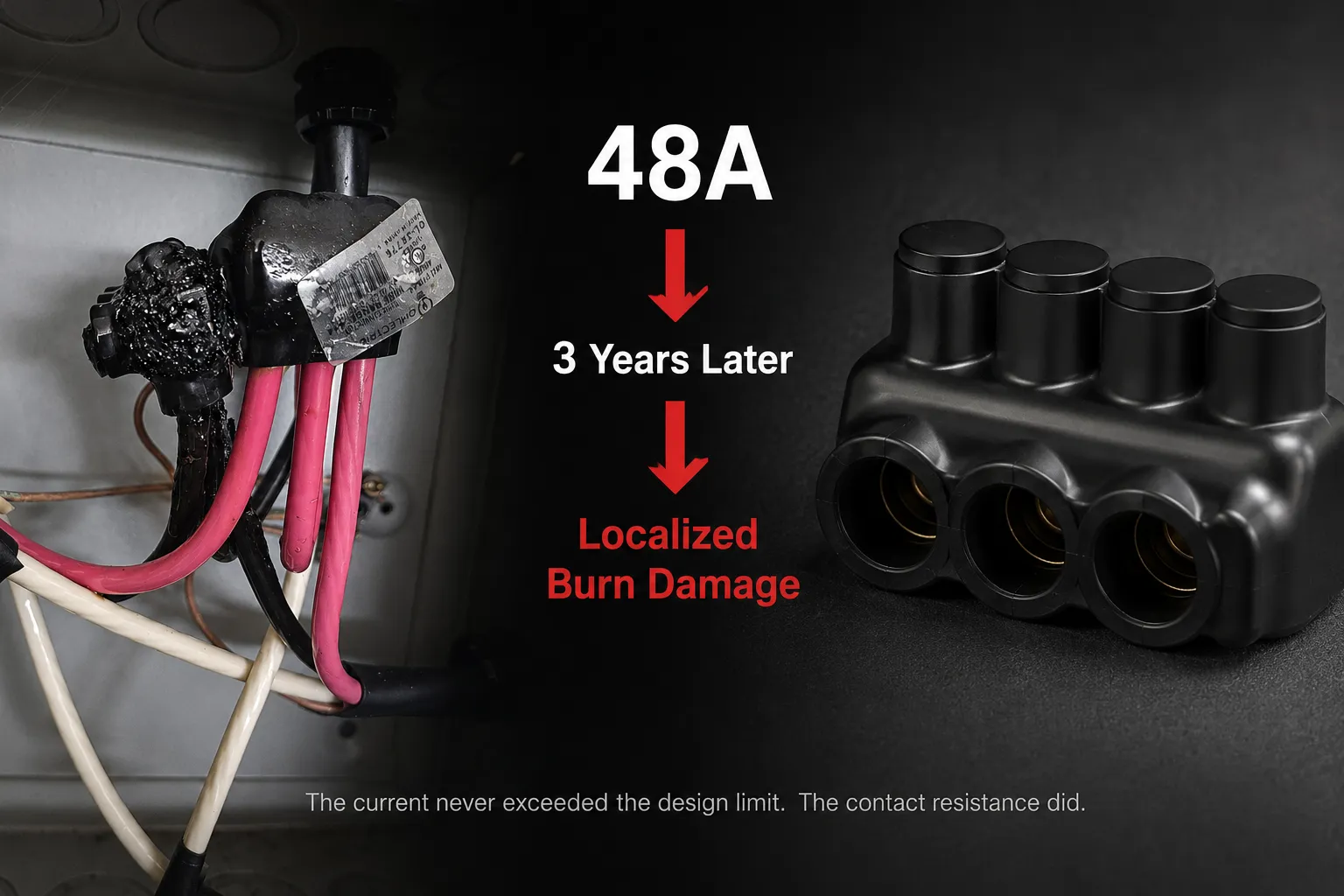
Causes include exceeding current limits, insufficient contact area, or poor ventilation. Understanding the causes of binding post overheating helps prevent long-term failures.
Solution: select higher-rated posts, improve cable termination, or check load requirements.
Issue 4 — Mechanical Wear
Frequent plugging/unplugging can wear out threads or caps.
Solution: Use spring-loaded posts or banana plugs for repeated connections.
Overview
Routine maintenance extends service life, improves conductivity, and prevents failures in audio, laboratory, and industrial systems.
Tip 1 — Keep Contact Surfaces Clean
Dust, oxidation, or fingerprints increase resistance. Clean periodically with isopropyl alcohol or contact cleaner.
Tip 2 — Check Tightness Regularly
Vibration in speakers or machines may loosen connections. Inspect audio systems every 3–6 months, and more frequently for industrial or laboratory equipment.
Tip 3 — Avoid Over-tightening
Over-tightening can deform metal parts, strip threads, or damage insulation. Tighten by hand unless otherwise specified.
Tip 4 — Protect from Corrosion and Moisture
Use stainless-steel terminals, gold-plated contacts, or waterproof boots in harsh or outdoor environments.
Overview
Binding posts are often compared to panel sockets, banana plugs, and alligator clips. Each connector serves different purposes, and selecting the right type enhances safety and system performance.

Binding posts offer higher current capacity, stronger mechanical clamping, and multiple wiring methods.
Panel sockets excel at rapid plug-in operations and are ideal for instruments that require frequent cable swapping.
A banana plug is a connector; a binding post is a terminal.
Banana plugs provide convenience and speed, while binding posts provide flexibility and secure long-term clamping.
Alligator clips are suitable for temporary connections but lack stability for long-term or high-current use. Binding posts are recommended for permanent, secure, low-resistance installations.
Overview
These frequently asked questions address common engineering, audio, and laboratory concerns related to binding posts. The concise answers are optimised for AI search, featured snippets, and technical user queries.
A1: Yes. Although their appearance may be similar, there are essential differences in connection method, installation structure, and current/voltage capacity. Binding posts support bare-wire clamping or banana plug insertion and are typically used for higher-current paths; panel sockets are more commonly used for standardised plug-in interfaces for signal input/output. Recognising this difference helps correct component selection and avoids performance issues.
👉 For a deeper comparison of their structures and functions, see our detailed guide on Binding Post vs Panel Socket
A2: From an engineering-selection perspective, it’s generally not advisable. If a panel socket is used in place of a binding post, you may face:
A3: Critical selection parameters include: panel hole diameter, compatibility with plug or bare wire, rated current & voltage, insulation jacket material (PVC, PA66, silicone), mounting depth, colour coding, and safety certifications (e.g., IEC / UL). For example, for a lab power output, you might select a binding post rated ≥ 15 A, ≥ 1000 V with a threaded nut; for signal input instrumentation, you might choose a panel socket with nickel-plated contacts and high insertion cycles.
A4: A banana plug is a “plug-in connector component” that can be inserted into a binding post or panel socket, used for quick connect/disconnect. The binding post, by contrast, is a “panel-mounted terminal” that accepts bare wire, banana plugs, pin connectors, etc. In other words: banana plug = plug; binding post = receptacle/terminal. See “The Complete Guide to Banana Plugs” for more details. [External link]
A5: In environments with frequent testing line changes, you may prefer panel sockets + banana plugs because they provide fast plug/unplug, stable contact, and lower maintenance burden. For fixed connections with fewer changes, binding posts may be more appropriate due to their robust construction and compatibility with bare wire. When selecting, consider “frequency of change/environment/maintenance convenience”.
A6: If space is minimal / cable changes are rare: choose a binding post, since it offers a simpler structure and lower cost. If space is limited but you expect frequent cable swaps, you may favour a panel socket with banana plugs. If budget allows and you want a standardised interface and easier future maintenance, you may consider both, while still checking materials/standards (eg, IEC, UL) for reliability.
A7: Certifications, material traceability, current ratings, and consistency between batches.
If you want high-quality Binding Post products, visit Test Leads World’s Binding Post Catalogue. We offer a variety of specifications and models to meet diverse needs.
Product Recommendations:
As a beginner, this guide equips you with comprehensive knowledge and practical steps, addresses common joint issues, and provides helpful resources to master Binding Posts. Whether building a home theatre, conducting laboratory tests, or sourcing industrial equipment, this article will be your go-to reference—extended reading: Panoramic Overview of Banana Plugs to help you gain a complete understanding.
Learn more about the history of Binding Posts on Wikipedia.
Final Note
Whether designing a power supply, configuring a test bench, or upgrading audio equipment, understanding binding posts will help ensure consistent signal transmission and long-term system reliability.
If you are unsure which binding post specification fits your application, consulting with an experienced supplier or testing samples before final selection is strongly recommended.

https://testleadsworld.com/products/magnetic-test-probe-4mm-banana-head/
https://testleadsworld.com/products/electrical-alligator-clips/
https://testleadsworld.com/products/25-425-4mm-hollow-banana-plug-all-copper-gold-plated/
https://testleadsworld.com/products/25-430-4mm-banana-plug-female/
https://testleadsworld.com/products/test-leads/banana-plug/
https://testleadsworld.com/products/test-leads/alligator-clips/
https://testleadsworld.com/products/test-leads/test-leads-cable/
https://testleadsworld.com/category-blog/expert
https://testleadsworld.com/category-blog/alligator-clips-electrical-testing/
https://testleadsworld.com/category-blog/binding-post-guide-types-applications/
https://testleadsworld.com/category-blog/comprehensive-guide-to-banana-plugs/
https://testleadsworld.com/category-blog/retractable-test-leads-with-a-magnet/
https://testleadsworld.com/category-blog/mini-alligator-clips-versatile-tools/
https://testleadsworld.com/category-blog/how-to-install-banana-plugs/
Hot Tags: Multimeter Test Leads, China, suppliers, manufacturers, factory, OEM, ODM, ISO certified, CE RoHS, REACH, wholesale, best quality, in stock, buy discount, CAT III / CAT IV Test Leads, Silicone Test Leads, PVC Test Leads, Banana Plug, Test Leads, Alligator Clips, Test Probes, BNC Adapters, High-Voltage Test Leads.