Our Location
Room 503, block 1, Juzili Building, Sandun Town, Hangzhou City, Zhejiang Province. China.

Room 503, block 1, Juzili Building, Sandun Town, Hangzhou City, Zhejiang Province. China.

Precision in Every Connection

"Jump clips" is not a standardised term — it overlaps with small lab test clips, jumper wire clips, and heavy-duty automotive clamps depending on context. This guide clarifies all three, compares them to alligator clips across current rating, jaw size, and contact material, and gives a clear decision table for when to use each type in electrical testing.


Before You Read
“Jump clips” means different things to different people.
→ Looking for automotive jumper cable clamps? Jump to the Automotive section below.
→ Looking for breadboard or PCB test clips? The comparison table in Section 3 is most relevant.
→ Comparing general lab test clips to alligator clips? Read from Section 2.
Alligator clips are spring-loaded, serrated-jaw clips used for temporary electrical connections across a wide range of current ratings — from low-current lab testing to high-current automotive applications.
“Jump clips” is not a standardised term. Depending on context it refers to:
— Small test clips on jumper wires for breadboard or PCB work (low current, under 5A)
— Heavy automotive jumper clamps on jump leads (very high current, 200A–600A+)
In electrical testing, the meaningful differences are never the name — they are the current rating, jaw size, contact material, and insulation design.
From the Manufacturer
Over more than 20 years manufacturing alligator clips and test leads for engineers and procurement teams across Europe, North America, and Asia, the most consistent pattern we see is this: clip failures almost never come from the clip design itself — they come from specification mismatch.
A customer sends us a failure report. The clip overheated. The reading was unstable. Contact was intermittent. And in almost every case, when we check the specification against the application, the answer is the same: the clip was used outside its rated current, or the jaw size did not match the contact point geometry.
The name on the package — jump clip, alligator clip, crocodile clip — tells you very little. The current rating, contact material, and jaw opening tell you everything.
This is why we wrote this guide.
— Betty Wang, QSNTECH
The electrical testing industry lacks a universal standard for clip terminology. The same physical component may be called an alligator clip, crocodile clip, test clip, or jump clip, depending on the manufacturer, country, and application context.
“Jump clips” specifically cause confusion because they overlap with three different product categories:
Small jumper wire clips used for breadboard prototyping and PCB testing — usually rated under 5A, with small jaw openings for fine-pitch contact points.
Laboratory test clips used with multimeter leads, oscilloscope probes, or bench instruments — ranging from 5A to 30A, depending on construction.
Automotive jumper clamps used on vehicle jump leads — rated for 200A to 600A or more during engine starting, with large jaw openings for battery terminals.
These three categories share a similar mechanical principle — a spring-loaded jaw — but are otherwise completely different products with different materials, current ratings, and safety requirements.
An alligator clip is a spring-loaded metal clamp with serrated jaws, used to create a temporary, reusable electrical connection without soldering. The serrated jaws grip wire leads, terminals, component legs, or test points securely enough for hands-free measurement.
The key performance factors in any alligator clip are:
Contact stability — the jaw must maintain consistent pressure throughout the measurement period without slipping or shifting.
Contact resistance — the resistance at the jaw-to-contact interface directly affects measurement accuracy, particularly at low signal levels. Copper alloy contacts with nickel or gold plating maintain lower, more stable contact resistance than steel contacts over repeated use.
Current rating — the clip must be rated for at least 25% above the expected operating current to avoid localised heating and contact degradation.
Jaw opening — must match the physical size of the contact point. A jaw that is too large for the contact provides minimal contact area and an unstable grip.
For a comprehensive guide to alligator clip types, specifications, and selection criteria, see our full Alligator Clips for Electrical Testing guide.
In laboratory and electronics contexts, “jump clips” most commonly refer to the small spring-loaded clips attached to jumper leads or breadboard jumper wires.
These clips are characterised by:
— Small physical size, typically 15mm to 30mm in length
— Low current rating, usually under 5A
— Full insulation to allow use in dense PCB environments without shorting adjacent pins
— Light spring force, suitable for delicate component leads but not for stable grip on larger conductors
In this context, jump clips are, functionally, a subset of small alligator clips — the distinction is primarily one of size and intended current range, rather than a fundamentally different product category.
| Feature | Small Jump / Test Clips | Standard Alligator Clips | Heavy-Duty Alligator Clips |
|---|---|---|---|
| Typical current rating | Under 5A | 5A – 30A | 30A – 600A+ |
| Jaw opening | Under 5mm | 5mm – 30mm | 30mm – 60mm+ |
| Contact material | Nickel-plated steel | Copper alloy / nickel-plated brass | Solid copper |
| Insulation | Fully insulated | Partial or full | Heavy insulated boot |
| Spring force | Light | Medium | Heavy |
| Typical use | Breadboard, PCB test points, fine-pitch components | Multimeter leads, bench testing, component measurement | Battery charging, automotive, power testing |
| Short-circuit risk | Low (fully insulated) | Medium | Low (insulated boots) |
This is the section most relevant to clip selection decisions.
Use small jump clips / mini test clips when:
— Working on breadboards, PCB test points, or fine-pitch components
— Current is under 5A
— You need full insulation to prevent accidental shorting of adjacent pins
— The contact point is a thin wire lead, component leg, or narrow terminal
Use standard alligator clips when:
— Connecting to multimeter probes, oscilloscope reference points, or bench instruments
— Current is between 5A and 30A
— You need hands-free measurement over an extended period
— The contact point is a wire, screw terminal, or moderate-size conductor
Use heavy-duty alligator clips when:
— Current exceeds 30A
— Connecting to battery terminals, power supply outputs, or large bus bars
— The application involves sustained high-current draw rather than brief measurements
— The contact conductor is thick-gauge wire or a large metal terminal
Do not use laboratory clips for automotive jump-starting. Standard and mini test clips are not rated for the hundreds of amps required during engine cranking. This is a safety risk.
For high-current applications, our Model 27.262 Safety Crocodile Clip is designed specifically for sustained current with fully insulated copper construction.
When engineers report problems with clip connections — intermittent readings, localised heating, unstable contact — the root cause is almost always one of three things:
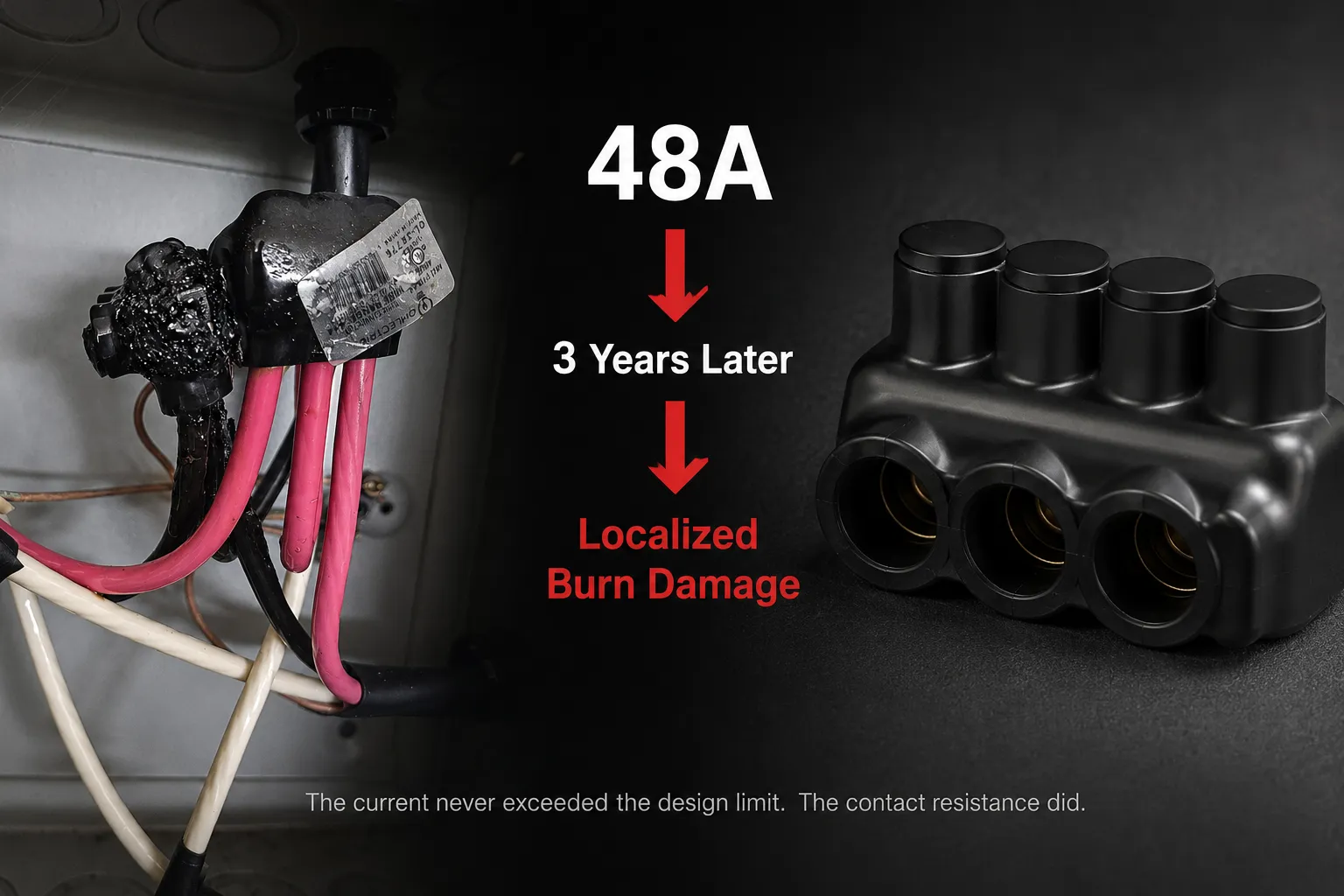
Using an undersized clip for the current being carried. A 5A-rated clip will overheat if sustained at 15A, regardless of its name. Current rating is the single most important selection criterion. Always select a clip rated at a minimum 25% above your expected maximum current.
Poor contact material. Nickel-plated steel oxidises over time, increasing contact resistance. For precision measurement, copper alloy contacts with nickel or gold plating maintain more stable, lower contact resistance across repeated use. This is especially important for low-resistance measurements, where even small changes in contact resistance can cause significant measurement error.
Jaw mismatch. A clip with a jaw opening much larger than the contact point provides minimal contact area and an unstable grip. A clip with a jaw opening too small cannot grip properly. Jaw size must match the contact point geometry — not just the wire gauge.
These failure modes apply regardless of whether the clip is labelled a jump clip or an alligator clip. The label matters far less than the specification.
For a detailed breakdown of how to specify clips for different measurement environments, see our Connector Selection Strategy guide.
Searches for “jump clips” often come from people looking for information on automotive jumper cables. This section addresses that directly.
The large clamps on automotive jumper cables — sometimes called jump clamps, battery clamps, or booster clamps — are a fundamentally different product from laboratory test clips:
— Rated for 200A to 600A or more during engine cranking
— Made from solid copper for minimum resistance
— Jaw openings of 40mm to 60mm to grip battery terminals
— Designed for short-duration high-current discharge, not continuous measurement
— Heavy insulated handles for safe use near batteries
Using automotive jump clamps as laboratory test clips is impractical. Using laboratory test clips for automotive jump-starting is unsafe. These products are not interchangeable.
For high-current alligator clips designed for sustained industrial and power applications, see our Heavy-Duty Alligator Clips range.


Q: Are jump clips and alligator clips the same thing?
In many laboratory contexts, yes. “Jump clip” is an informal term for the small alligator-style clips used on jumper leads. There is no standardised technical definition distinguishing them as separate product categories. The specification — current rating, jaw size, contact material — always matters more than the name.
Q: Can I use alligator clips as automotive jumper cable clamps?
No. Standard laboratory alligator clips are rated for milliamps to a few amps. Automotive battery clamps must handle 200-600A or more during engine cranking. Using undersized clips for automotive jump-starting is a serious safety risk.
Q: Why do alligator clips overheat during testing?
Overheating is almost always caused by exceeding the clip’s current rating. Even a brief current exceedance increases contact resistance, generating heat at the jaw contact point. Always select a clip rated at least 25% above your maximum expected current.
Q: What is the difference between alligator clips and crocodile clips?
There is no functional or structural difference. “Alligator clip” is standard in North America; “crocodile clip” is common in the UK, Australia, and Europe. Both refer to the same spring-loaded serrated jaw clip used for temporary electrical connections.
Q: What causes intermittent readings when using test clips?
Intermittent readings are usually caused by unstable jaw contact — either the jaw is too large for the contact point, the spring force is insufficient, or the contact surface has oxidised. The fix is to match the jaw size to the contact point, use copper-alloy contacts, and verify that the clip is within its current rating.
Q: What makes a good alligator clip for precision measurement?
For precision measurement: copper alloy contact body rather than steel, nickel or gold plating to resist oxidation, consistent spring force across thousands of open-close cycles, and jaw size matched to the test point. Contact resistance directly affects measurement accuracy at low signal levels.
Jump clips and alligator clips are not fundamentally different products. In laboratory use, “jump clip” is an informal name for small alligator-type clips on jumper leads. In automotive use, “jump clips” refers to heavy-duty clamps, a completely separate product category.
In electrical testing, the decisions that matter are always current rating, jaw size, contact material, and insulation design.
If you need help selecting the right clip specification for your application, contact us with your current rating, test point geometry, and measurement environment. We manufacture alligator clips across the full range — from miniature PCB test clips to heavy industrial clamps — and can recommend the correct configuration from our production range.
Browse our full alligator clip range →


I want to take a moment to discuss the difference between alligator clips and crocodile clips. While browsing websites, I noticed both terms were used, so I consulted our engineers and looked them up on Wikipedia. I found that these two terms typically refer to the same clip, with no substantial difference between them. The distinction arises due to regional and industry-specific naming conventions. Some sources note that crocodile clips typically have longer, narrower jaws, whereas alligator clips are shorter and broader. This design difference may affect their suitability for certain specific applications.
The alligator clip is commonly attributed to Ralph S. Mueller, founder of Mueller Electric Company, who developed the design in the early 20th century to improve temporary electrical connections.
Since its introduction, the alligator clip has become a standard component in electrical testing and instrumentation, valued for its simplicity, reliability, and versatility across laboratory and industrial applications.
(Background information — not related to automotive jump-start applications)
https://testleadsworld.com/products/magnetic-test-probe-4mm-banana-head/
https://testleadsworld.com/products/electrical-alligator-clips/
https://testleadsworld.com/products/25-425-4mm-hollow-banana-plug-all-copper-gold-plated/
https://testleadsworld.com/products/25-430-4mm-banana-plug-female/
https://testleadsworld.com/products/test-leads/banana-plug/
https://testleadsworld.com/products/test-leads/alligator-clips/
https://testleadsworld.com/products/test-leads/test-leads-cable/
https://testleadsworld.com/category-blog/expert
https://testleadsworld.com/category-blog/alligator-clips-electrical-testing/
https://testleadsworld.com/category-blog/binding-post-guide-types-applications/
https://testleadsworld.com/category-blog/comprehensive-guide-to-banana-plugs/
https://testleadsworld.com/category-blog/retractable-test-leads-with-a-magnet/
https://testleadsworld.com/category-blog/mini-alligator-clips-versatile-tools/
https://testleadsworld.com/category-blog/how-to-install-banana-plugs/