Our Location
Room 503, block 1, Juzili Building, Sandun Town, Hangzhou City, Zhejiang Province. China.

Room 503, block 1, Juzili Building, Sandun Town, Hangzhou City, Zhejiang Province. China.

Precision in Every Connection

Why do banana sockets become loose over time? The answer is rarely a single failure. In most cases, spring fatigue, contact wear, mechanical stress, and repeated mating cycles gradually reduce retention force and connection stability. This article examines the real causes behind loose banana sockets, including several field examples that are often misdiagnosed as plug failures. It also explains how to identify socket-related problems, how different socket designs affect service life, and what engineers can do to improve long-term reliability. Whether used in laboratory instruments, test equipment, or power supplies, understanding these wear mechanisms can help prevent intermittent connections, increased contact resistance, and premature connector replacement.
“A Real Explanation of Failure Modes from Someone Who Has Worked in the Banana Socket Industry for More Than 20 Years”
When a banana connection becomes unstable, most people immediately assume the banana plug is the problem. In reality, the socket side can also be the weak point. Customers often describe the same pattern: the plug works fine on another device, but feels loose, wobbly, or develops intermittent contact on a particular socket after a period of use.
This distinction is important because it completely changes the troubleshooting process. If you have read my previous article about why banana plugs become loose, you already know that the problem is not always the plug itself. What if the issue is actually on the socket side? This article focuses on banana sockets and explains, from the perspectives of elasticity, wear, and mechanical stress, why they gradually lose their grip over time.
Repeated mating cycles gradually change the contact interface. At the same time, cable movement places repeated bending stress on the plug-to-cable junction, making strain relief an important part of mechanical durability.
If the socket is panel-mounted, the mounting hardware and panel structure must also remain secure; A loose mounting nut can make an otherwise functional socket feel unstable.
A loose banana socket is not necessarily a sudden failure. More often, it starts with subtle symptoms: the plug inserts too easily, the connection feels unstable, or a slight movement causes intermittent contact.
This is why socket loosening is often overlooked. Many people first suspect the cable, the plug, or even the speaker or equipment itself. However, the real issue is often that the contact surfaces have gradually lost their elasticity over time.
Some users report that the plug slides into the socket with almost no resistance, or that the connection remains stable only when the cable is completely motionless.
The customer assumes the socket has become loose.
In reality:
The outer diameter of the banana plug has worn down.
Especially with:
Result:
The customer believes the socket has failed.
In reality:
The user feels:
“It keeps getting looser.”
In fact, the contact section is undamaged.
Only the mechanical mounting has failed.
In laboratories, high-current test leads may remain connected for long periods.
The cable is heavy.
Long-term side loading causes:
In some cases, the problem is not the socket at all but the plug itself. Different banana plug designs wear differently over time and can affect overall connection stability.
The most common cause is a reduction in contact spring force. Many banana sockets rely on internal spring contacts to maintain sufficient retention force on the plug. Over time, repeated compression and relaxation can lead to metal fatigue, reducing the socket’s ability to maintain consistent contact pressure.
Wear at the contact interface also affects connection stability. Every insertion and removal cycle creates friction between the plug and socket. As the number of mating cycles increases, both the geometry and surface condition of the contact area gradually change. Customers often describe this process as:
“It used to fit tightly, but gradually became loose.”
This is particularly common in environments where equipment is frequently connected, disconnected, or moved.
Key Indicator: In a typical laboratory environment, a banana socket may experience dozens of mating cycles per week. In teaching laboratories, that number can easily reach dozens of cycles per day.
Manufacturing tolerances also play a role. If a socket provides insufficient retention force when new, it will generally exhibit looseness much sooner than a higher-quality design. Many users describe these products as “cheap” or “loosely fitting,” which often reflects poor dimensional control or inadequate contact design.
Environmental exposure can further accelerate degradation. Moisture, oxidation, dust, and contamination can affect the contact interface and reduce long-term reliability.
Mechanical loading is another important factor. When cable weight is continuously supported by the plug, or equipment is frequently repositioned, the socket experiences ongoing lateral mechanical stress. Over time, this can contribute to reduced retention force and premature wear.
Socket looseness and plug looseness are related but not the same failure.
A plug problem can often be improved simply by replacing the plug.
A socket problem usually remains even after trying several different plugs.
This distinction is extremely useful during troubleshooting.
If the same plug works perfectly on another device but feels loose on one particular socket, the problem is most likely on the socket side.
Many users eventually reach this conclusion only after repeatedly swapping plugs and discovering that the plug itself is not the issue.
The simplest approach is cross-testing.
Try the same plug in another device, or test several known-good plugs in the suspected socket.
If all other connections perform normally and only one socket consistently feels loose, the socket itself is likely worn or fatigued.
Another useful indicator is connection stability under light mechanical disturbance.
If a slight touch causes intermittent contact, the socket may no longer be providing sufficient retention force.
Some users report that they must push the plug deeper than usual or apply additional pressure to maintain a stable connection. This often indicates that the internal contact spring system has lost part of its original elasticity.
A visual inspection can also reveal potential problems.
Look for oxidation, discolouration, deformation, or evidence of overheating.
A loose socket is more than just a poor mechanical fit.
Even when no visible damage is present, reduced contact pressure can gradually increase contact resistance.
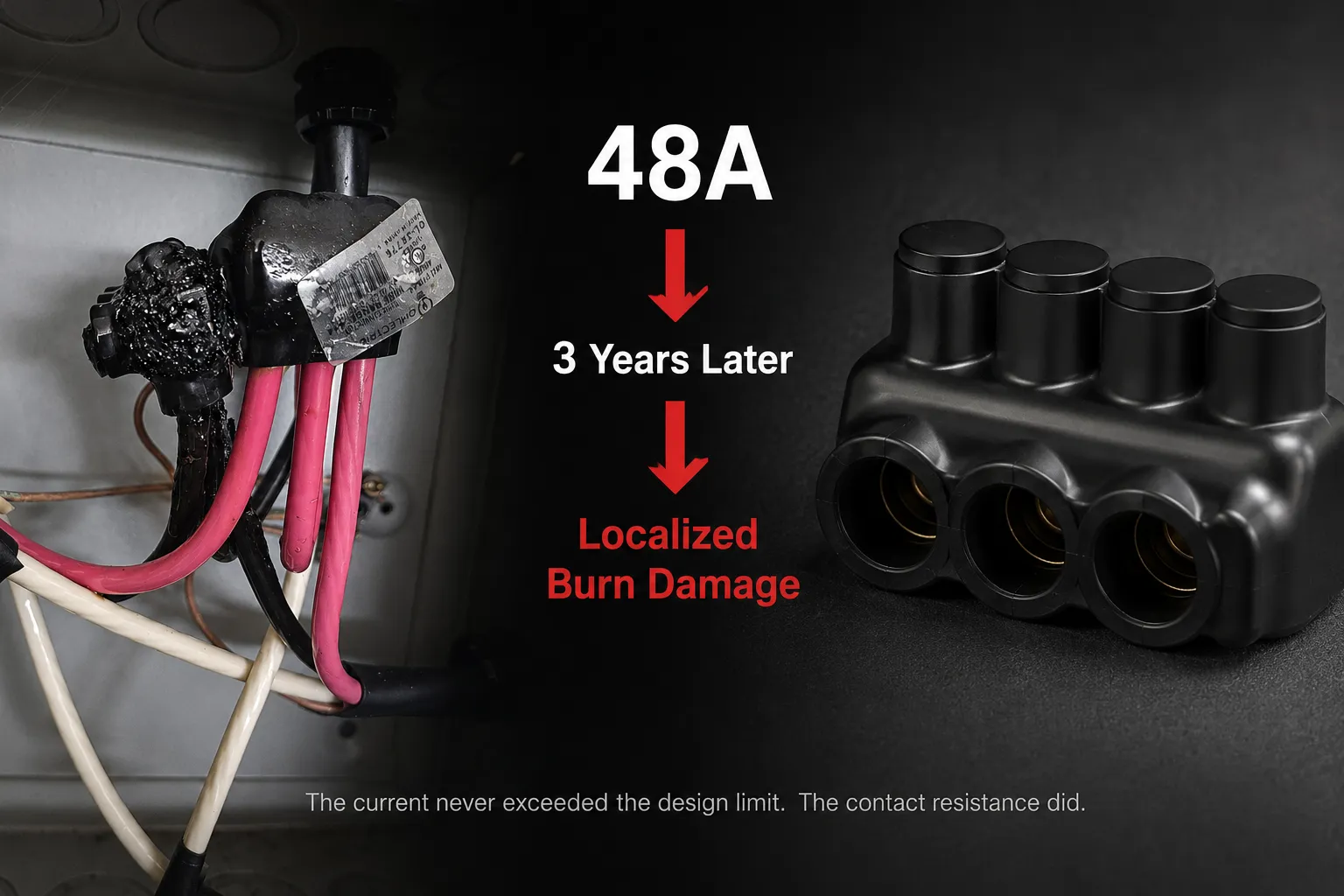
In low-current signal applications, this may not be immediately noticeable. However, in applications carrying continuous currents above 10A, reduced contact pressure can generate localised heating and may eventually cause further damage to the connector.
Choosing the right banana socket from the outset is often the most effective way to reduce long-term wear and maintain reliable connections.
Contact design, metal quality, and mechanical fit are often more important than appearance or price.
If the application involves frequent use, long-term stability is usually worth prioritising over small cost savings.
Reducing mechanical stress is equally important.
Do not allow the cable weight to hang directly from the plug, and avoid applying side loads to the socket when moving equipment.
Many cases of unexplained loosening are actually the result of accumulated mechanical stress over time.
During insertion and removal, use reasonable force.
Do not force the plug in, pull it out aggressively, or apply force at an angle.
Excessive force accelerates contact wear and may permanently deform the spring structure.
If the socket has already become noticeably loose, regular inspection and timely replacement are generally the safest approach.
A banana socket does not work in isolation. Its long-term reliability depends on the complete mechanical connection — from the cable and plug to the socket and the panel that supports it.
This is why a connection that feels loose should not automatically be diagnosed as a worn socket.
Repeated mating cycles gradually change the contact interface. At the same time, cable movement places repeated bending stress on the plug-to-cable junction, making strain relief an important part of mechanical durability. If the socket is panel-mounted, the mounting hardware and panel structure must also remain secure; a loose mounting nut can make an otherwise functional socket feel unstable.
Repeated insertion and withdrawal can cause banana plug wear, gradually changing the plug’s contact geometry and surface condition. A worn plug may therefore fit loosely even when the socket is still in normal condition.
These mechanical changes eventually affect electrical performance. When wear, reduced spring force, or movement lowers the effective contact pressure between the plug and socket, contact resistance can become higher or less stable.
For troubleshooting, we therefore look at the connection as a chain:
Mating Cycles → Strain Relief → Panel Mount → Plug Wear → Contact Resistance
The important point is that these are not five independent problems. They are different parts of the same reliability system.
A connection may begin with mechanical wear and only later appear as an electrical problem. By the time intermittent readings or localised heating become noticeable, the original cause may have started much earlier somewhere else in the connection chain.
For this reason, evaluating only the socket — or only the current rating printed on a datasheet — can miss the actual weakest link.
In laboratory and industrial power supplies, socket loosening should not be treated as an isolated component problem. Plug wear, cable movement, panel mounting stability, and contact pressure can all influence long-term power supply connector reliability. Evaluating the complete output connection system helps engineers identify potential mechanical and electrical weaknesses before they develop into failures.
Spring-Contact Type
Slotted Type
Multi-Contact Point Design
In our after-sales feedback, most loosening issues do not occur in high-current applications. They occur in laboratory environments where insertion and removal are frequent.
The following factors influence socket service life:
| Factor | Impact on Service Life |
| Contact Material | High |
| Spring Design | High |
| Plating Quality | High |
| Current Rating | Medium |
| Color | None |
Over the past few years, most of the “loose socket” issues we have investigated were not caused by exceeding the connector’s current rating.
More commonly, the root causes were frequent mating cycles, long-term lateral loading from heavy test leads, or wear resulting from repeated use of low-quality plugs.
A banana socket that is connected only a few times per day may provide reliable service for many years.
The same socket used in a teaching laboratory or R&D environment may experience thousands of mating cycles within a single year.
For that reason, when customers ask me about service life, my first question is usually about usage frequency rather than current rating.
In practice, the number of mating cycles often has a greater impact on socket longevity than the current being carried.